
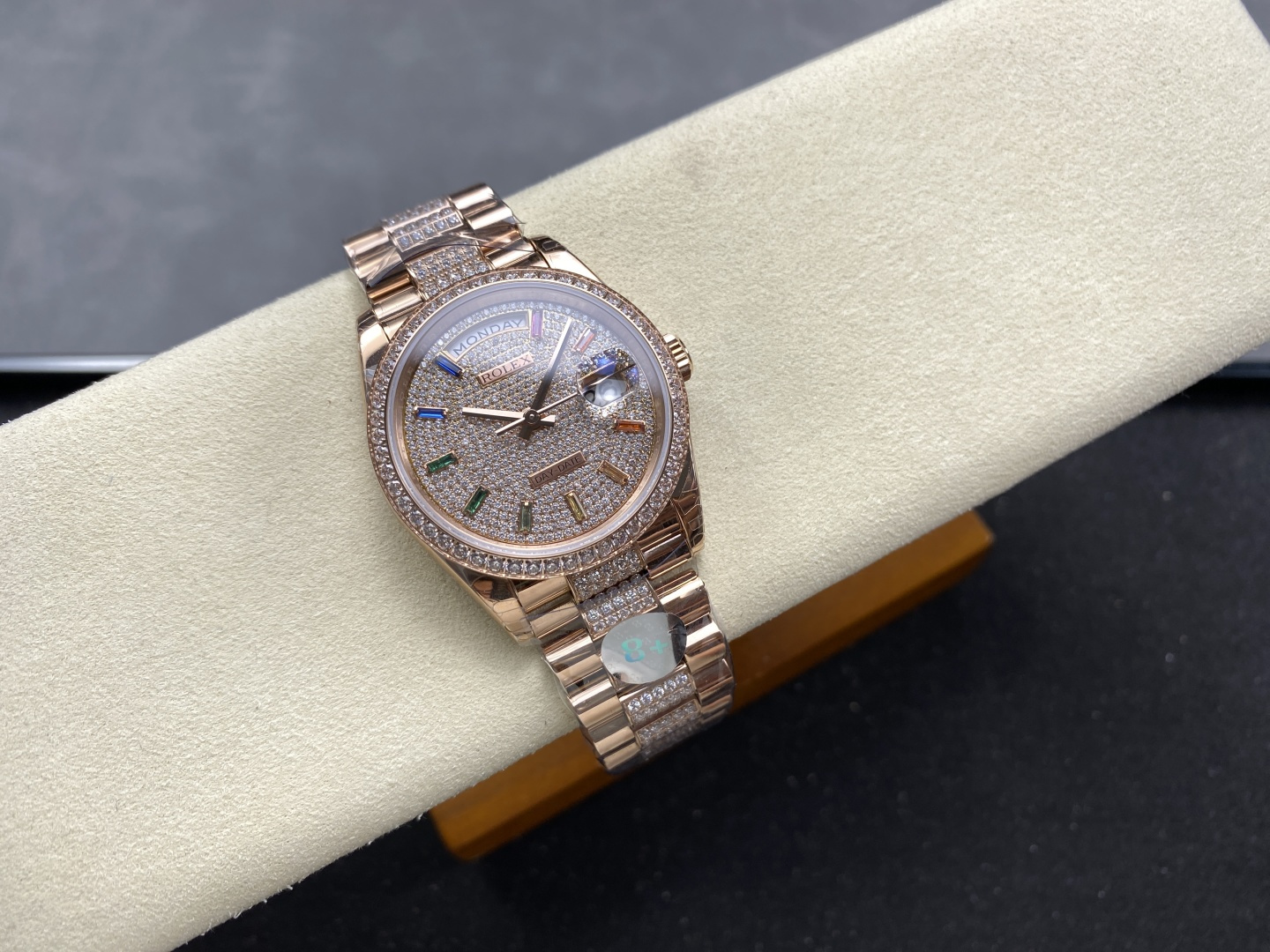
I have owned four 3255-powered replicas over the past three years. Before that, I cycled through roughly a dozen lower-tier pieces that looked acceptable in photos but fell apart in daily wear. What changed my buying standard was not a new factory or a new seller. It was the 3255 movement. Once I understood what a properly built rolex super clone could do with that caliber, I stopped wasting money on visual approximations and started treating this hobby like a long-term ownership decision rather than a one-time photo experiment.
This guide is for buyers who want to know whether a modern fake rolex is worth their money, which factory tiers actually matter, and how to avoid the mistakes I made early on. I am not here to convince you that every replica is perfect. I am here to explain where the real value sits, where the risks hide, and what I would do differently if I were starting from zero today.
Why the 3255 Movement Is the Only Starting Point Worth Discussing
The 3255 is the caliber Rolex introduced in 2015 for the Day-Date 40 and certain Datejust 41 references. It replaced older movements and brought a 70-hour power reserve, the Chronergy escapement, and a redesigned barrel architecture. In the replica world, the 3255 clone is the current ceiling for dress-watch movements. But not all 3255 clones are equal, and the difference between a good one and a mediocre one is the first filter any serious buyer needs to apply.
A rolex super clone built around the 3255 is not automatically better than every other replica. It is better only when the factory has invested in the movement, the case, and the dial together. I have seen watches with a decent 3255 clone inside a poorly finished case. That combination is worse than a simpler watch built with consistency, because the movement raises expectations that the rest of the watch cannot meet.
What the 3255 Clone Actually Is
When a factory advertises a 1:1 clone of the 3255, it means the external appearance, rotor shape, bridge layout, jewel positions, and balance wheel placement are replicated closely enough that a non-expert looking through a case back would not immediately spot the difference. The best versions from Clean Factory and VS Factory achieve this structural fidelity. The gear train layout and the rotor’s bidirectional winding system are functionally reproduced, which is why the day and date change operate smoothly under normal conditions.
That said, 1:1 does not mean identical metallurgy or identical tolerances. The hairspring is the one component that no Chinese workshop has successfully cloned. Rolex’s Parachrom Blue is a proprietary niobium-zirconium alloy, and what you get in a replica is a painted blue hairspring that looks correct but behaves differently under temperature variation and magnetic fields. This matters for long-term accuracy but is invisible in day-to-day use.
The practical impact is that you should judge the movement by how it performs in your hand and on your wrist, not by whether every internal component matches Rolex’s original metallurgy. A well-regulated 3255 clone will run within a few seconds per day, wind smoothly, and hold a power reserve close to the genuine specification. A poorly assembled one will feel rough, lose time unpredictably, and develop problems within months. The difference is not the design. It is the execution.
Why This Movement Changed the Buying Decision
Before the 3255 and its 3235 sibling, replica dress watches relied on modified ETA clones or generic Asian automatic calibers. Those movements worked, but they had the wrong visual architecture, the wrong power reserve, and the wrong winding feel. You could always tell something was off when you picked up the watch. The 3255 clone fixed most of that. A properly assembled 3255 from a top factory gives you 65 to 68 hours of measured power reserve on a full wind, compared to the genuine’s 70 hours. Daily accuracy clusters around +2 to +5 seconds per day when the movement is well-regulated out of the box.
The reason this matters is simple. Most buyers do not need a movement that is metallurgically identical to Rolex. They need a movement that behaves predictably, feels mechanical rather than hollow, and does not require constant attention. The 3255 clone delivers that when it comes from the right factory. It also makes the watch easier to live with because the date changes cleanly, the winding is smooth, and the rotor is quiet enough that you do not hear it across a quiet room.
The consequence is that you can now buy a replica Day-Date or Datejust 41 that behaves, on the wrist, like a genuine watch in the ways that actually matter to a wearer. That does not mean it is a genuine watch. It means the gap between a quality replica and the real thing has narrowed in the areas most owners experience every day.
What Happens After Eighteen Months
Here is where most reviews stop and real ownership begins. In my experience, a quality 3255 clone feels reliable for the first 12 to 18 months of consistent wear. The problems typically start after that window. The most common failure point is not the movement itself but the lubrication. Factories use a lubricant that is adequate for initial operation but degrades faster than the oils used in Swiss service centers. When the lubrication breaks down, amplitude drops, timekeeping drifts, and the movement becomes noticeably less stable.
The second issue is repair difficulty. There are no official spare parts for these clones. A watchmaker who works on genuine Rolex movements will not have the tools or documentation for a VR3255 or its equivalents. In many cases, servicing a failed 3255 clone means replacing the entire movement, which costs $150 to $250 depending on the source. This is not a dealbreaker, but it is a cost you need to factor into your ownership math before you buy, not after something goes wrong.
The third issue is that a fake rolex with a 3255 clone can still be a poor purchase if the seller does not stand behind it. A movement that fails at month fourteen is a very different experience when the seller offers support versus when they disappear after the sale. That is why the seller matters as much as the factory, and why I only buy from sources that provide QC photos or video before shipping.
The Factory Question: Clean, VS, and Why It Still Matters in 2026
The replica community organizes itself around factory codes, and for good reason. Two watches with identical specifications on paper can come from factories with vastly different quality control standards. For 3255-based Rolex replicas, the relevant comparison is between Clean Factory and VS Factory, with GM Factory as a lower-tier option that I would generally avoid. This is not brand loyalty. It is a practical distinction that shows up in winding feel, dial quality, and how long the watch remains reliable.
A best rolex replica is not defined by the name on the listing. It is defined by the factory that built the case, the factory that built the movement, and the seller who inspected the final product. When those three pieces align, you get a watch that feels cohesive. When they do not, you get a watch that looks right in photos but disappoints in daily use.
Clean Factory vs. VS Factory: A Real Comparison
Clean Factory earned its reputation on Rolex sports models, particularly the Submariner and GMT-Master II. Their 3255-powered Day-Date 40s are generally excellent in case finishing, bracelet weight, and dial printing. The VR3235 and related movements they use have a distinctive winding sound, often described as a swooshing noise that differs from the genuine’s clicking feel. This is a tell if someone knows what to listen for, but it does not affect timekeeping or reliability.
VS Factory is the current leader in movement refinement. Their 3235 and 3255 clones use a Dandong-produced movement that more closely mimics the genuine winding sound and feel. The VS3235 has a proper clicking sensation when you wind it, which is a meaningful improvement for anyone who handles the watch regularly. VS Factory’s production volume is lower than Clean’s, which means availability is tighter and prices are slightly higher. In my experience, the $100 to $150 premium for a VS movement is worth it if you plan to keep the watch for more than two years. If you are buying as a short-term experiment, Clean is perfectly adequate.
The third option, GM Factory, produces 3255 clones at a lower price point. I have owned one. The case finishing was acceptable, but the movement felt rougher, the power reserve measured closer to 58 hours, and the date change had a visible hesitation that the Clean and VS versions did not exhibit. If your budget is strictly under $500, GM is an option, but you are accepting a noticeably lower standard of execution.
What Factory Quality Actually Affects
Factory quality is not an abstract concept. It shows up in specific, testable ways. A Clean or VS 3255 clone will typically pass a 48-hour timing check with less than 8 seconds of deviation. A GM clone may show 15 to 20 seconds of variation over the same period. The bracelet on a Clean Factory Day-Date will have properly finished bevels and a clasp that closes with a solid, confidence-inspiring click. Lower-tier factories often have sharp edges on the clasp and a looser bracelet fit.
The dial is another area where factory choice matters enormously. In my experience, the dial is where the real money sits in a replica. A case can be CNC-milled to within microns of a genuine. But a sunburst dial involves lacquer depth, laser-etched rehaut details, and a specific interaction with light that lower-tier factories cannot reproduce. Clean Factory’s azure and olive dials for the Day-Date 40 are the closest to genuine that I have seen from a replica, and that alone justifies the price difference for many buyers.
The practical consequence is that a fake rolex from a top factory is not just a better-looking watch. It is a more stable watch. It holds its timekeeping, resists minor shocks, and maintains its power reserve for longer. That stability is what separates a watch you enjoy wearing from a watch you constantly worry about.
Price Bands and What You Actually Get at Each Level
The replica market has stratified into clear tiers over the past three years. Understanding where your money goes at each level is the most reliable way to avoid overpaying or buying something that will disappoint you within months. Price alone does not guarantee quality, but at this point in the market, it is a strong indicator of which factory built the watch and which movement is inside.
If you are shopping for quality rolex replicas, the first question is not “How much does it cost?” It is “What am I actually getting for that price?” A $700 watch with a VS movement and a Clean case is a better purchase than a $500 watch with a GM movement and a lower-tier dial, even though the cheaper option looks attractive upfront. The difference shows up in the details you notice after a few weeks of ownership.
The $150 to $300 Range
This is the tier that most people start with and most people regret. Watches in this range often use 316L stainless steel instead of the 904L alloy that Rolex uses. The difference is not just corrosion resistance. 904L is denser, which gives the watch its characteristic heft. A 316L replica feels noticeably lighter, and that lightness is the first thing a knowledgeable person will notice when they handle it. Movements in this range are typically generic Asian automatics with decorative plates that mimic the 3255’s appearance but share none of its architecture. Power reserve is often 38 to 42 hours, not 70. These watches are not super clones. They are visual approximations that will not hold up to close inspection or long-term wear.
The reason this matters is that buyers in this range often do not realize they are buying a different category of product. They see “3255” in the listing and assume they are getting the same movement discussed in forums. They are not. The movement may look similar through the case back, but the internal components, tolerances, and lubrication are all lower grade. The result is a watch that may run for six months and then develop problems that cost more to fix than the watch is worth.
The $500 to $800 Range
This is where the real entry point sits. A $600 to $700 Clean Factory or VS Factory 3255-powered replica gives you 904L steel, a sapphire crystal with correct 2.5x cyclops magnification, a ceramic bezel where applicable, and a movement that will run within a few seconds per day of COSC standards. The materials match the genuine specification. The weight is correct. The finishing on the case and bracelet is good enough that you will not be self-conscious wearing it in public.
The trade-off at this price is movement refinement. You may get a Clean Factory VR3235 rather than a VS Dandong movement. The winding feel will be slightly different. The rotor may be marginally louder. But for most buyers, these differences are imperceptible without a side-by-side comparison. This is also the range where rolex replicas for sale listings become reliable, because sellers at this price point usually provide real QC photos and stand behind their products.
The $1,000 to $1,500 Range
This is the top of the current market. Watches in this range use the best available movements, often with upgraded lubrication and tighter tolerances from the factory. The dials are the highest quality available, with correct sunburst effects, proper lume application, and accurate printing. The bracelets have solid end links, correct spring bar positions, and clasps that operate with the same resistance as the genuine article.
In my experience, the difference between a $700 replica and a $1,200 replica is not about whether one looks real and the other does not. Both will pass a wrist test. The difference is in the details that matter to you as the owner: how the crown feels when you unscrew it, how the date wheel aligns in the window, how the bracelet articulates on your wrist, and how the movement holds up after two years rather than six months. If you plan to wear the watch daily and keep it long-term, the upper tier is worth the investment. If it is a rotation piece that you wear occasionally, the mid-tier is sufficient.
If you want to compare current listings without jumping between dozens of seller pages, super clones Rolex is a useful starting point. It will not replace your own judgment, but it can save time when you are trying to understand what is actually available at each price level.
Wrist Test vs. Macro Test: Why Most Buyers Optimize for the Wrong Standard
This is the original analysis I want to share, because it has changed how I evaluate every replica I consider buying. The replica community is obsessed with macro-level accuracy. People post 60x zoomed photos of dial printing, compare rehaut engraving depth pixel by pixel, and debate whether the font on the date wheel is 0.1mm too thick. This is the macro test. It is a legitimate way to evaluate quality. It is also almost entirely irrelevant to how you will experience the watch.
The wrist test is different. It asks: when this watch is on your wrist, at normal viewing distance, in normal lighting, does it look and feel like what it is supposed to be? The wrist test does not care about the microscopic texture of the lume plots. It cares about whether the dial color reads correctly in sunlight, whether the bracelet feels substantial, whether the watch sits correctly on your wrist, and whether the second hand sweeps in a way that feels mechanical rather than electronic.
What the Wrist Test Measures
The wrist test measures the things you actually experience as an owner. It measures weight distribution, bracelet comfort, case thickness, crown operation, and how the watch reads in natural light. A rolex super clone can pass every macro test and still fail on the wrist if the bracelet pulls hair, the case sits too high, or the dial looks flat when you step outside. These are not minor issues. They are the reasons people stop wearing a watch after the initial excitement fades.
I have owned replicas that failed the macro test badly. The date font was slightly off. The crown logo on the clasp was not quite the right shape. I wore them for months and never once felt self-conscious. I have also owned replicas that passed the macro test with flying colors but failed the wrist test because the bracelet pulled hair, the case was uncomfortable on my wrist bone, or the dial looked lifeless in daylight. The macro test is for forums. The wrist test is for life.
What the Macro Test Misses
The macro test misses context. A 60x zoomed photo can make a tiny flaw look catastrophic, but it cannot tell you how the watch feels when you put it on. It cannot tell you whether the bracelet articulates smoothly or whether the clasp opens with the right amount of resistance. It cannot tell you whether the movement winds smoothly or whether the rotor rattles when you move your arm.
The reason this matters is that most buyers do not have the tools or the lighting conditions to perform a genuine macro test. They are relying on someone else’s photos and someone else’s standards. That is a recipe for buying a watch that satisfies a forum but disappoints you. The macro test is useful for identifying obvious flaws, but it should never be the primary criterion for a purchase decision.
How I Apply Both Before Buying
I use the macro test as a filter and the wrist test as a decision. First, I look at QC photos to rule out obvious problems: misaligned date wheels, crooked markers, poorly printed dials, and obvious case finishing issues. If a watch fails those basic checks, I do not consider it further. But once a watch passes that filter, I stop obsessing over zoomed details and start asking about the things that matter in daily wear.
I ask the seller for a video of the watch in natural light. I ask about bracelet comfort and case dimensions. I ask whether the movement has been regulated and what the measured power reserve is. Those questions tell me more about whether I will enjoy wearing the watch than any 60x photo ever could. The macro test tells you whether a watch is acceptable. The wrist test tells you whether it is worth owning.
Common Mistakes I See Buyers Make (And One I Made Myself)
Every buyer makes mistakes, especially early on. What separates a good purchase from a bad one is not avoiding every error. It is knowing which errors cost real money and which ones are just part of the learning curve. I have made all three of the mistakes below at some point, and I have watched other buyers make them repeatedly.
A fake rolex can be a satisfying purchase, but only if you understand what you are buying and what you are not. The mistakes below are the ones that turn a reasonable purchase into a regret. They are not about spending too much or too little. They are about misunderstanding what the product actually is.
Mistake One: Assuming “Super Clone” Means Consistent Quality
The term “super clone” has been diluted to the point of near-meaninglessness. I have seen $250 watches advertised as super clones that were nothing more than decorated ETA clones with a Rolex-style rotor. The label tells you the factory’s ambition, not the watch’s reality. Before you buy, ask for the specific factory name, the movement designation, and QC photos or video of the actual watch you will receive. If a seller cannot provide these, you are buying blind.
One common mistake is trusting a listing that uses the phrase rolex super clone without any supporting detail. The phrase itself is not a quality guarantee. It is a category description. What matters is whether the seller can tell you which factory built the case, which factory built the movement, and whether they have inspected the final product. A seller who cannot answer those questions is not a seller you should trust with your money.
Mistake Two: Ignoring the Service and Repair Reality
One common mistake is assuming that because the movement is a clone, any watchmaker can service it. In reality, few independent watchmakers in the USA have experience with VR3235 or VS3255 movements. The lubrication degrades after 12 to 18 months of daily wear, and when it does, your options are limited. You can send it back to the seller for service, which involves international shipping and weeks of waiting. You can find a specialist who works on replica movements, which is possible but requires research. Or you can replace the movement entirely, which costs $150 to $250 plus labor. None of these are dealbreakers, but you need to know about them before you buy, not after something goes wrong.
The practical impact is that you should budget for a movement replacement at some point if you wear the watch daily. That does not mean the watch is a bad value. It means the ownership cost is higher than the purchase price. Buyers who understand this are rarely disappointed. Buyers who expect a replica to run for five years without service are almost always disappointed.
Mistake Three: Overvaluing Water Resistance
Every replica I have owned has claimed some level of water resistance. I have tested exactly none of them beyond splashing water on the case. The gaskets used in replica watches are not held to the same standards as genuine Rolex gaskets, and the case back sealing is often the weakest point. If you plan to swim with your replica, you are taking a risk that the manufacturer’s claims do not support. Treat every replica as splash-resistant at best. If water resistance matters to you, buy a genuine dive watch from a brand that stands behind its specifications.
The reason this mistake is so common is that sellers list water resistance numbers because buyers expect to see them. But those numbers are often copied from the genuine specification rather than tested on the replica. The safest approach is to assume the watch is not waterproof and to avoid submerging it. That one rule will prevent more damage than any other piece of advice in this article.
Based on Experience: My Actual Buying Advice
If I were buying my first 3255-powered replica today, I would set a budget of $650 to $850 and focus on Clean Factory or VS Factory. I would ask for QC photos and a short video in natural light. I would confirm the movement designation and ask whether the watch has been regulated. I would accept that the watch will need a movement replacement after a year or two of daily wear, and I would treat that as part of the cost of ownership.
I would also buy from a seller who has a track record and who communicates clearly. One seller I have used and found reliable is replicafactory.cx. They understand the difference between factory tiers and can match you with the right watch rather than just pushing whatever is in stock. That kind of guidance is worth more than a small price difference, especially when you are spending several hundred dollars on a watch you cannot inspect in person.
The final piece of advice is to be honest with yourself about what you want. If you want a watch that looks convincing on your wrist and feels good to wear, a mid-tier 3255 clone is enough. If you want the best possible movement and dial, pay for the upper tier. If you want a genuine Rolex, save for a genuine Rolex. A replica can be a satisfying ownership experience, but only if you buy it for the right reasons.
FAQ
It is 1:1 in structural appearance and basic function. The bridges, rotor, jewel positions, and balance placement mirror the genuine 3255 closely enough that a casual inspection through a case back will not reveal differences. It is not 1:1 in metallurgy. The hairspring is not a Parachrom Blue equivalent, and the tolerances on internal components are wider than genuine Rolex specifications. For practical purposes, the 1:1 claim is accurate for what you see and feel. It is not accurate for how the movement performs over a decade of use.
Based on my experience and what I have seen from other long-term owners, expect 12 to 18 months of reliable daily wear before lubrication degradation begins to affect performance. If you rotate the watch and wear it two or three days a week, that window extends to 24 to 30 months. When performance drops, you will notice increased timekeeping deviation and reduced power reserve. At that point, you are looking at either a movement replacement or a specialist service.
VS Factory for the movement. Clean Factory for the case and dial finishing if you prioritize visual accuracy. If you can find a VS movement in a Clean case, that is the ideal combination, and some sellers offer exactly that. If you have to choose one, VS edges ahead for long-term ownership because the movement refinement is noticeable in daily use. Clean is the better choice if you are buying primarily for appearance and plan to rotate the watch.
Most will not. Genuine Rolex service centers will refuse outright. Independent watchmakers vary. Some will work on replica movements if you are upfront about what you are bringing them. Others will not touch them because parts availability is uncertain and the liability is unclear. Before you buy, identify a local watchmaker who is willing to work on replica movements, or accept that you will be replacing the movement rather than servicing it.
Measured power reserve on a well-assembled 3255 clone typically falls between 65 and 68 hours. That is close enough that you will not notice the difference in daily wear. A watch wound fully on Friday evening will still be running on Monday morning. Lower-tier clones may show 55 to 60 hours, which is still usable but noticeably short of the specification.
The seller matters as much as the factory. A good seller will provide QC photos or video of the actual watch before shipping, will be transparent about the factory and movement, and will offer some form of warranty or return policy. One source I have used and found reliable is replicafactory.cx. They are worth checking if you want a seller who understands the difference between factory tiers and can match you with the right watch rather than just pushing whatever is in stock.
If you plan to keep the watch for more than a year and wear it regularly, yes. The VS movement’s winding feel and rotor quietness are noticeably better. If you are buying a watch to try the experience and may sell it or rotate it out within a year, the Clean movement is adequate and you can save the $100 to $150 premium.
For most people, it is the weight and the bracelet feel. A genuine Rolex in 904L steel has a density that is difficult to replicate with lower-grade alloys. The bracelet on a genuine Rolex articulates smoothly with no sharp edges and a clasp that operates with a specific resistance. These are things you feel rather than see, and they are the hardest aspects for any replica to get right. If you are comparing a replica to a genuine side by side, handle both. The difference in hand feel is more revealing than any visual comparison.